Printed Programme or Spoken Introduction?
Printed programme or spoken introduction: learn which details to read, hear, or save for later so context helps you listen without crowding the music.
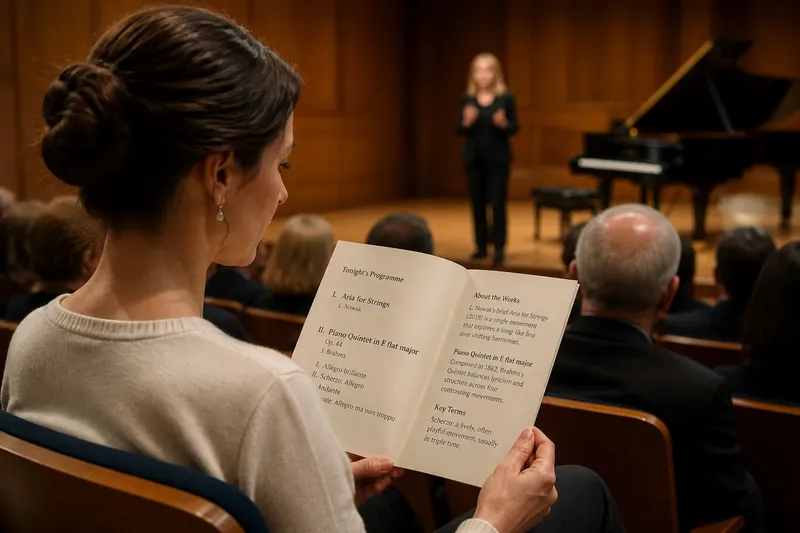
The common mistake with a printed programme or spoken introduction is expecting one to do the other’s job. A listener who reads through the performance can miss its changing sound; one who tries to retain a stream of spoken details may lose the thread before the first phrase. Print can wait. Speech cannot.
Imagine a hypothetical evening at a small concert hall: the programme pairs an unfamiliar short work with a longer piece whose sections are listed in the booklet. There is room for a brief introduction, but not a lecture. The listener wants context without a plot summary of the music.
Different kinds of attention
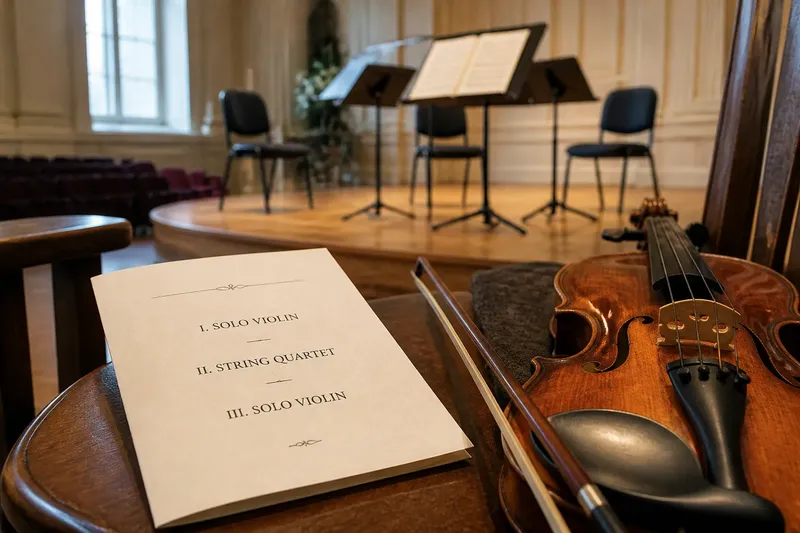
Printed notes suit information that needs to stay available: names, movement titles, unfamiliar terms, and descriptions of a work’s broad structure. Readers can scan them before the concert, consult them at intermission, or leave them closed.
A spoken introduction is temporary and shared. A speaker can use pace, emphasis, or a short musical excerpt to direct attention toward one audible feature. That makes speech useful for orientation, but less suitable for details listeners may want to check later.
Think of the distinction as reference versus cue. A page can be revisited; a concise spoken point can help the ear settle into the music.
What belongs in print
Programme notes work well for precise identification and information that benefits from rereading. A movement list can clarify the broad shape of a longer work, while a short explanation of an unfamiliar term can prevent that term from becoming a distraction.
Good layout matters. Clear headings, legible type, and separate entries for each work make it easier to find a name without scanning a dense block of prose. Notes need not forecast every musical event to be useful.
Print also gives the listener control over timing. Read before entering the hall, during a break, or not at all; keeping a booklet open during the performance is not a measure of attentiveness.
What belongs in speech
A spoken introduction is strongest when it offers one or two points that listeners can recognize by ear. A speaker might identify a recurring instrument, distinguish contrasting textures, explain an unfamiliar title, or point to a change in the music. The cue should invite attention, not prescribe an interpretation.
Plain language and a calm pace help the audience settle. A musician may also explain a performance choice, such as how the ensemble balances a passage, but a brief remark is more useful than a catalogue of caveats and biographical detail.
In the hypothetical concert, the speaker names an early change in texture and stops there. The booklet remains available for the longer work’s section names; neither format has to carry the whole evening.
Choosing a format?
Should I read notes before the concert?
Read enough to recognize the work and understand terms that might otherwise distract you. If you prefer discovery, save descriptions of the music’s sequence for intermission or afterward.
Can a spoken introduction replace programme notes?
It can offer a useful starting point, but speech is difficult to revisit and has little room for detailed names or structure. Keep a written programme or notes if you want a reference later.
What should an introduction include?
One or two clear points are easier to carry into the music than a compressed biography. A useful cue names something audible, such as a change in texture, without insisting on what it means.
How can I avoid spoilers?
Skip descriptions that reveal a work’s sequence or destination, and use the booklet for names or terms instead. A speaker can stay spoiler-light by pointing out a listening feature without narrating what happens next.
A useful division
For a listener choosing between a printed programme or spoken introduction, ask what needs to remain available. Names, section labels, and unfamiliar terms suit print; a brief cue for listening suits speech.
At the hypothetical concert, the listener reads the short note on the unfamiliar work before the performance, listens for the speaker’s cue, then checks the longer piece’s section names at intermission. The result is a clear tradeoff: less preparation in advance, but a reference remains on the page when details matter later.
If a detail matters after the performance, mark the page or note the work’s name during the break. Context is most useful when it leaves room for the sound it was meant to illuminate.