The Theme That Returns Wearing a New Coat
Hear a returning musical theme more clearly by comparing one feature—rhythm, register, or instrumentation—without turning attentive listening into homework.
The common mistake with a returning musical theme is trying to recall every detail of its first appearance while hearing every detail of its return. That turns listening into a memory exam, and the music does not pause for answers. Compare one audible feature instead: rhythm, register, or instrumentation.
A theme may keep its outline while moving from a low instrument to a high one, or pass from strings to woodwinds. Those changes can alter its character without making it a different idea. A light routine can help you hear the relationship without turning a concert into homework.
Choose one thread
Before listening, pick a single feature to notice. Rhythm may be easiest: listen for a long-short pattern, a repeated note, or a pause that gives the theme its gait. Register means whether the melody sits relatively high or low; instrumentation means which instruments carry it.
Do not monitor all three at once. One clear comparison is enough to make a return intelligible. Treat other details as background, not a second assignment.
Choose instrumentation when the color changes clearly, as when a melody moves from flute to cello. Choose rhythm for a distinctive lilt or repeated figure. Choose register when the melodic line’s move upward or downward is easy to hear.
Listen in three passes
Use a recording, a live performance, or a piece you already know. Rather than assigning a task to every day of a week, make three short passes when convenient. Stop once you have a useful comparison; there is no certificate for completing the set.
- Hear the whole piece. Listen without pausing. Notice where a passage seems to return, but do not decide yet what changed.
- Recall the first appearance. Replay the relevant opening section if you are using a recording. Listen for the theme’s contour: does the melody rise, fall, repeat a note, or turn back on itself?
- Compare the return. Focus on one feature. Ask whether the rhythm feels unchanged, stretched, compressed, or interrupted; whether the melody sits higher or lower; or whether a different instrument carries it.
If you cannot locate the theme, listen to the piece again without stopping and mark the passage that seems familiar. For a recording, you can return to likely sections afterward. At a concert, there is no need to solve the puzzle before the next note arrives.
Compare the same passage
Memory gets less dependable when the first appearance and the return are far apart. A recording lets you replay the relevant sections, but avoid jumping back and forth so quickly that each becomes a fragment. Hear some context before and after the theme each time.
Say you are listening to a piano piece with a short rising figure near the beginning, which later returns beneath a stronger accompaniment. On the first pass, you choose rhythm and hear a repeated note before the upward turn. On the return, you notice that the repeated note lasts longer. The observable difference is a more suspended rhythm, even though the added accompaniment makes the passage sound fuller.
That is a complete listening observation. You do not need to decide what the composer intended or attach a fixed mood to the change. If you describe its effect, tie it to what you heard: the longer note delays the turn, so the return seems less hurried.
Hear change in performance
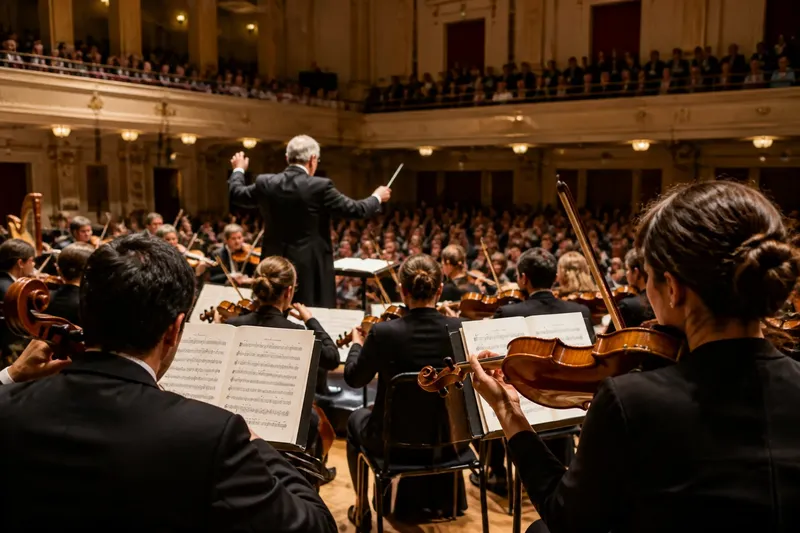
In a concert, performers can shape the same written passage differently. A conductor may bring out an inner line, or a soloist may give a note more weight before the melody continues. Such choices can redirect your attention without changing the theme’s basic outline.
Keep to one feature. If you are following rhythm, notice whether the pulse feels broader or more urgent. If you are following instrumentation, notice which section is prominent. If you are following register, attend to the height of the melodic line rather than how forcefully it is played.
There is no need to write while the music sounds. If a comparison stays with you, note it during the interval or after the concert. A few words—“same contour, lower strings” or “return stretched at the end”—are more useful than a transcript of impressions.
Questions about returns?
How can I recognize a theme?
Listen for a memorable melodic contour, rhythm, or combination of notes that appears again. You do not need to name the key or identify every instrument.
Does a returning theme have to sound identical?
No. Its rhythm, register, harmony, accompaniment, or instrumentation may change while enough of its shape remains for the ear to recognize it. The return can be clear even when its surface differs.
What if the first appearance is hard to hear?
Stay with the piece and mark the passage that seems familiar rather than guessing at the first appearance. With a recording, replay likely sections later; at a live concert, simply note where the return seemed to occur.
Should I follow every change?
No. Choose one feature for a listening pass, then switch features another time if you wish. Tracking everything at once can make small differences harder to hear.
Keep a small note
A compact note can preserve a useful comparison for another hearing. Record the passage, the feature you followed, and what changed: “Middle section, register: tune returns lower than at opening.” That is specific enough to guide your attention without pretending to explain the whole piece.
If the comparison remains uncertain, say so. “Possible handoff from oboe to strings” is more accurate than turning a guess into a fact. You can check a score or programme later; the listening itself does not depend on having the correct label.
Use a recording’s track controls or a score when they help you locate the passage. If you consult notation, follow the edition’s labels rather than assuming every instrument name or marking will match every performance. The ear remains the main tool.
Let the return reshape hearing
A theme’s return can make an earlier passage sound different in retrospect. A tune first heard as a plain outline may later seem more urgent when its rhythm tightens, or more exposed when familiar accompaniment disappears. Notice the contrast without insisting on a single response.
Listening for a returning musical theme need not become a hunt for hidden clues. Compare one feature in the first appearance and the return, then let the rest of the performance remain in view. When the tune comes back, a small, specific difference may be all you need to hear the passage anew.